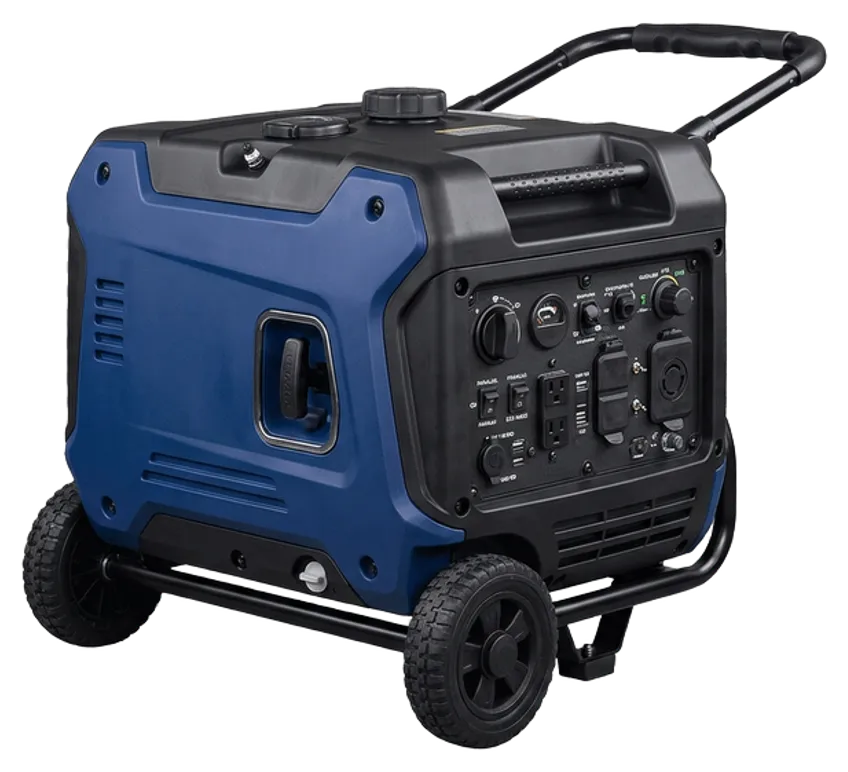
Westinghouse iGen5000DFc
Best all-round value dual-fuel inverter; Wirecutter 2026 top pick
Running: 3,900W
Starting: 5,000W
Noise: 52 dBA
Weight: 105.8 lb
Price: $800–$1,100
Independent research and hands-on testing of the 10 best backup generators for US homeowners. Compare portable, dual-fuel, solar, and whole-house generators with verified specs and safety-first guidance.
Portable generators cause over 70 carbon monoxide deaths per year in the United States, according to CPSC data.
Source: CPSC
Minimum safe placement distance for a portable generator from any door, window, or vent to prevent CO entering the home.
Source: CPSC
2024 hurricane season drove a 25.8% surge in generator installations, which reverted to baseline in 2025 (ServiceTitan).
Source: ServiceTitan
The comparison table below shows the key specs for all 10 picks. Scroll horizontally on mobile to see all columns.
| Model | Award | Running W | Starting W | Fuel | Noise dBA | Runtime | L14-30 | CO Shutoff | Price Band | Buy |
|---|---|---|---|---|---|---|---|---|---|---|
| Westinghouse iGen5000DFc | Best Overall | 3,900 | 5,000 | gasoline, propane | 52 | 18h @25% | No | Yes | $800–$1,100 | Buy Now |
| Honda EU2200i | Quietest | 1,800 | 2,200 | gasoline | 48 | 8.1h @25% | No | Yes | $1,000–$1,300 | Buy Now |
| DuroMax XP12000EH | Best for Whole-House Backup | 9,500 | 12,000 | gasoline, propane | 74 | 19h @25% | Yes | Yes | $1,100–$1,400 | Buy Now |
| EcoFlow Delta Pro 3 | Best Battery Backup | 4,000 | 8,000 | battery, solar | — | — | Yes | — | $2,500–$3,500 | Buy Now |
| Anker SOLIX F3800 | Best High-Capacity Solar | 6,000 | 9,000 | battery, solar | — | — | Yes | — | $2,500–$4,000 | Buy Now |
| Westinghouse WGen7500DF | Best Value Home Backup | 7,500 | 9,500 | gasoline, propane | 72 | 11h @25% | Yes | No | $1,000–$1,300 | Buy Now |
| Champion 201592 4000W Dual Fuel Inverter | Best Budget Dual-Fuel Inverter | — | 4,000 | gasoline, propane | 64 | 10h @25% | No | Yes | $700–$900 | Buy Now |
| WEN DF475T | Best Under $500 | 3,800 | 4,750 | gasoline, propane | — | 11h @50% | Yes | — | $400–$500 | Buy Now |
| Generac iQ5200DF | Best for California (CARB) | 3,900 | 5,200 | gasoline, propane | — | 15h @25% | No | Yes | $1,000–$1,300 | Buy Now |
| Bluetti Elite 200 V2 | Best Value Power Station | 2,600 | 3,900 | battery, solar | — | — | No | — | $800–$1,000 | Buy Now |
Best all-round value dual-fuel inverter; Wirecutter 2026 top pick
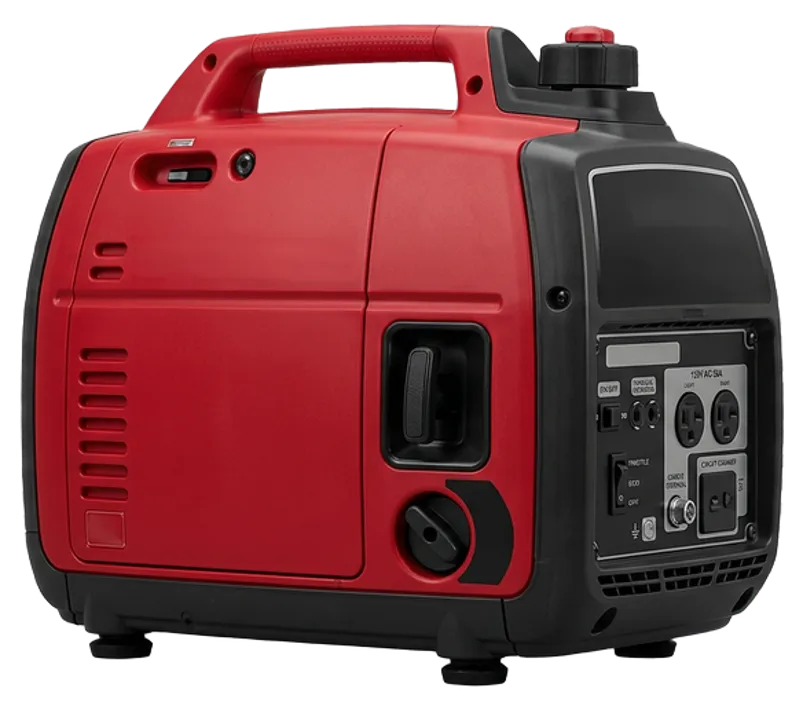
Quiet, light backup for sensitive electronics and small loads
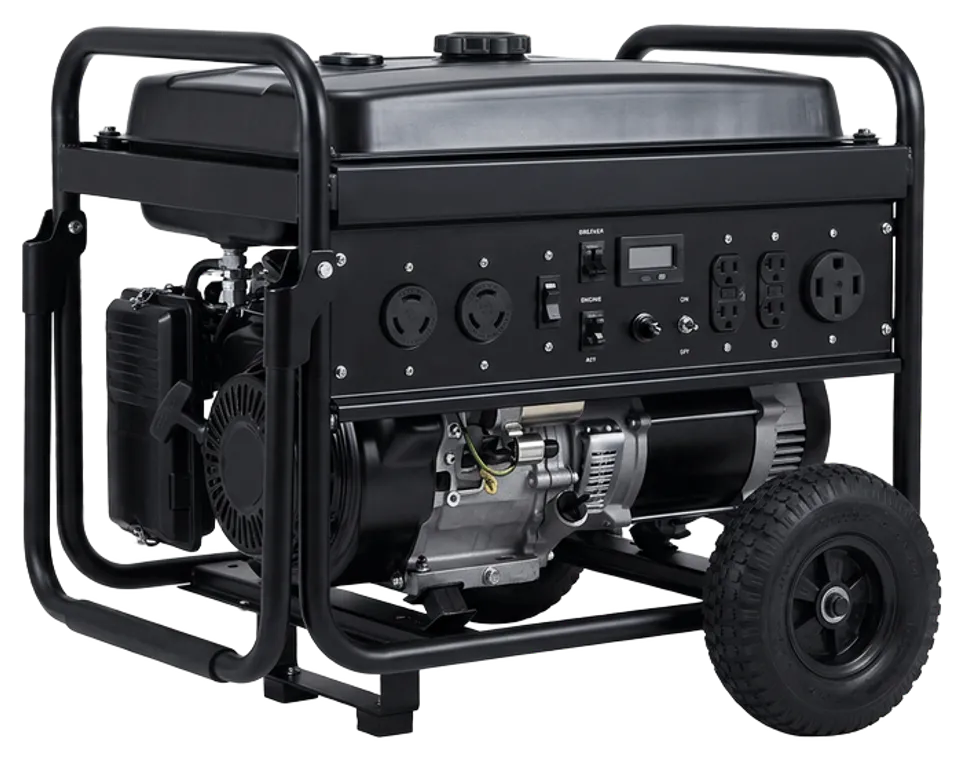
Highest usable wattage per dollar; L14-30R plus 50A 14-50R
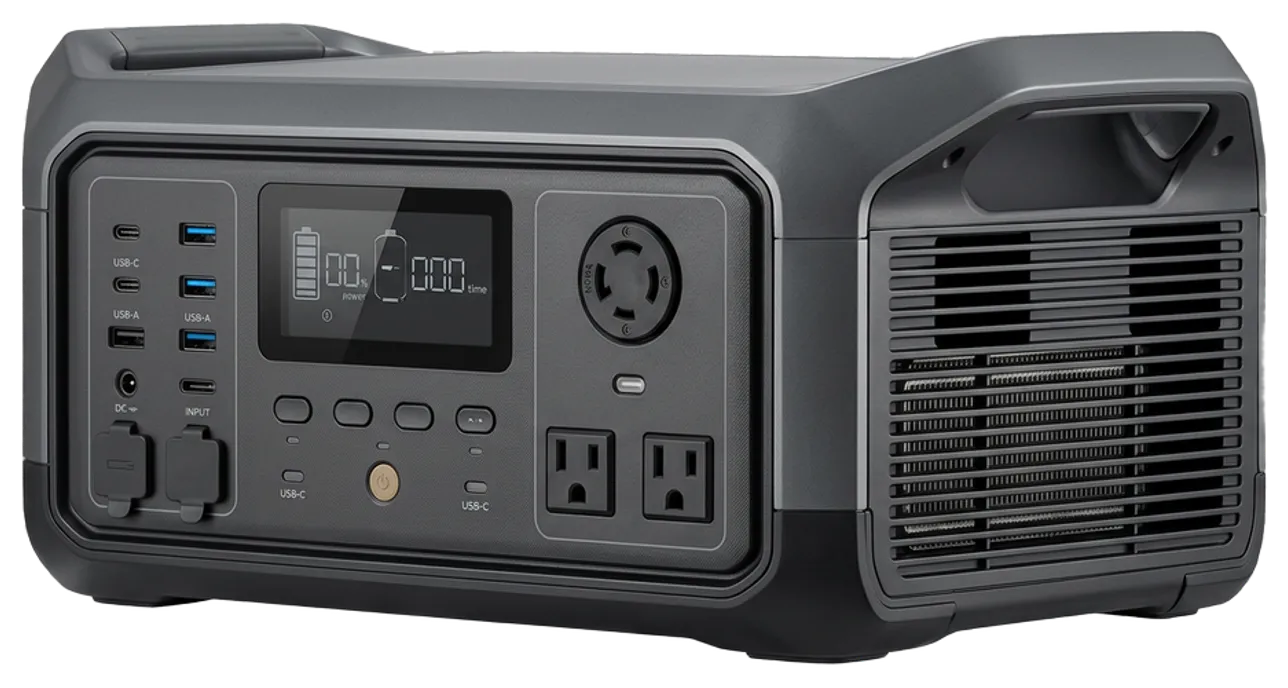
Indoor-safe home backup with native 120/240V split-phase and 48kWh expansion
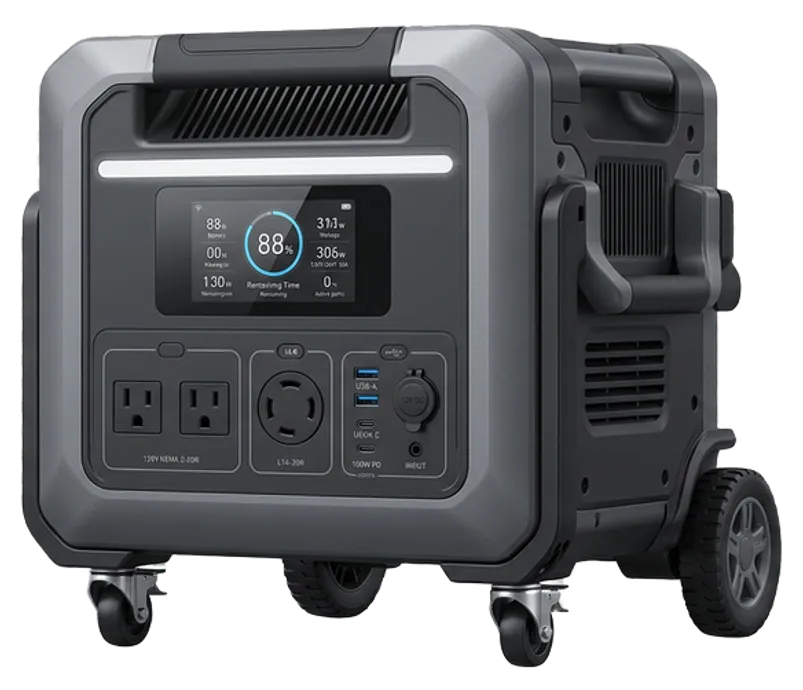
Highest output battery unit with built-in NEMA 14-50 and L14-30 for EV/RV and panel tie-in
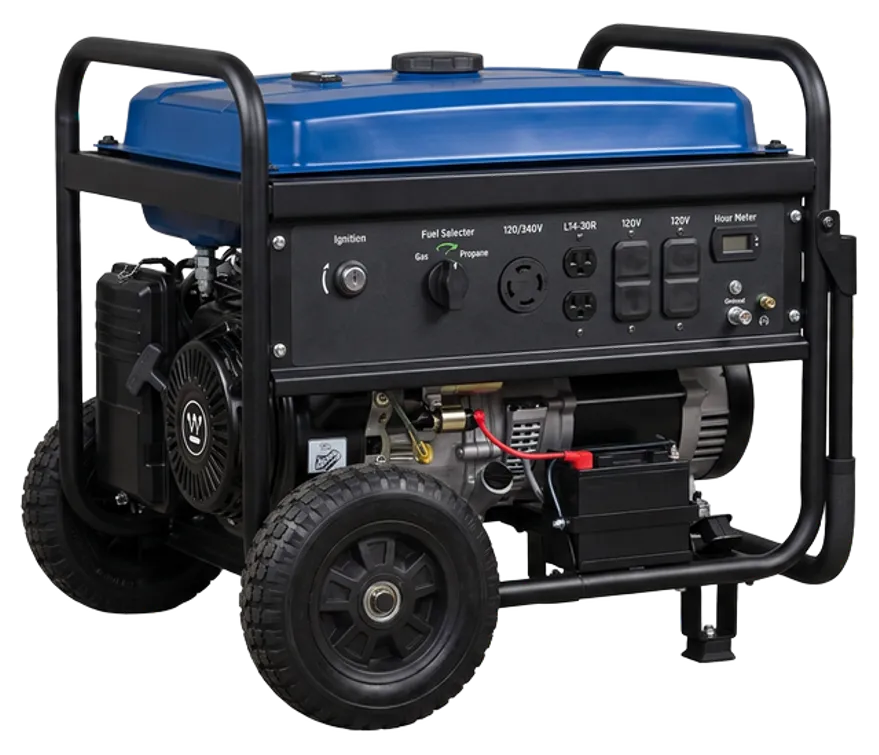
Transfer-switch-ready home backup with remote key fob start
Safety Notice
This model does NOT include a carbon monoxide (CO) shutoff sensor. You MUST use a battery-powered CO alarm indoors and place the generator at least 20 feet from any door, window, or vent.
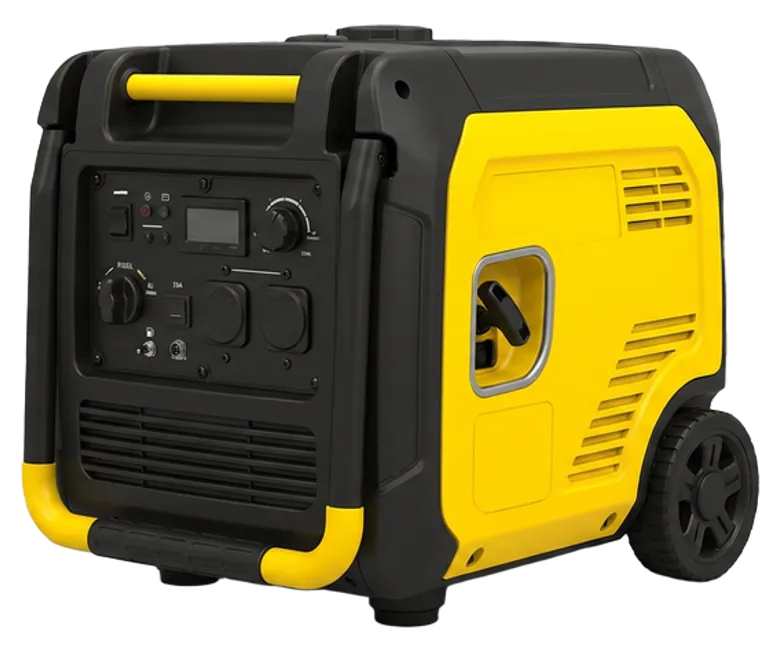
Longest propane runtime in class at 25h on a 20lb tank
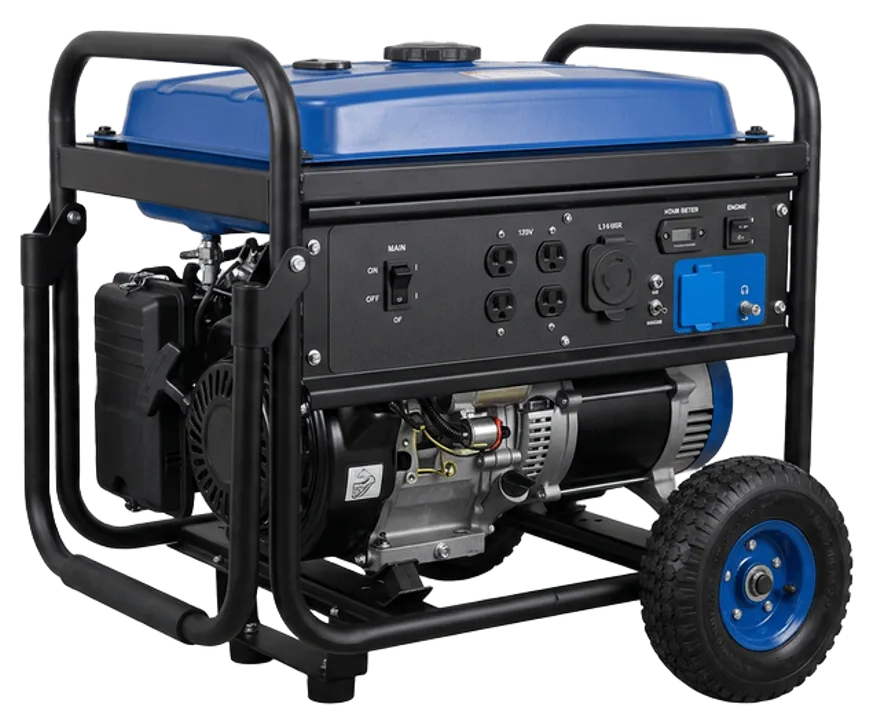
Cheapest route to a transfer-switch-ready 120/240V dual-fuel unit
Safety Notice
No carbon monoxide (CO) shutoff sensor has been confirmed for this model. Treat it as absent: use a battery-powered CO alarm indoors and place the generator at least 20 feet from any door, window, or vent.
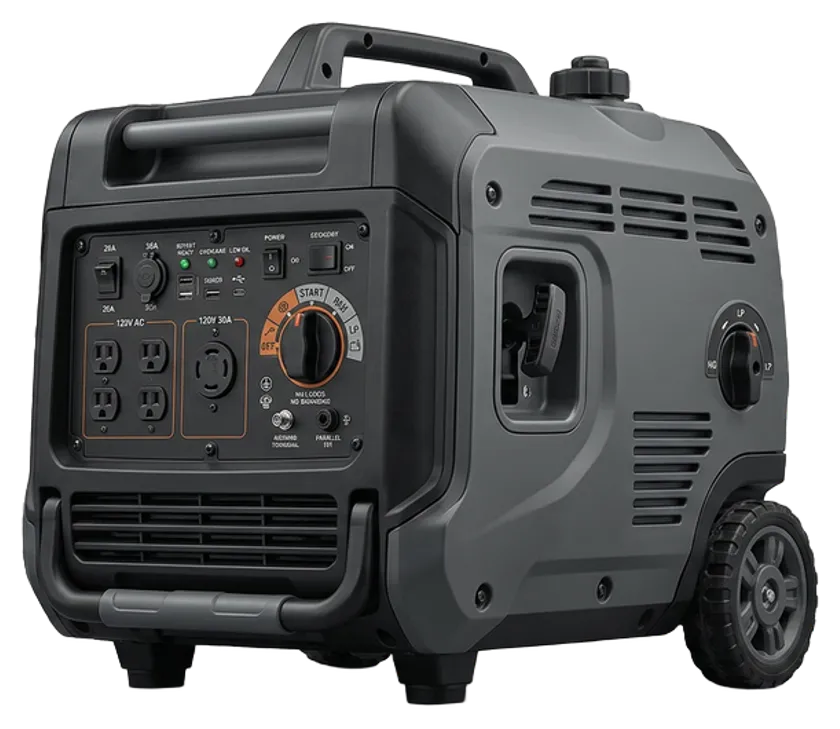
One of very few CARB-legal dual-fuel inverters; strong propane runtime
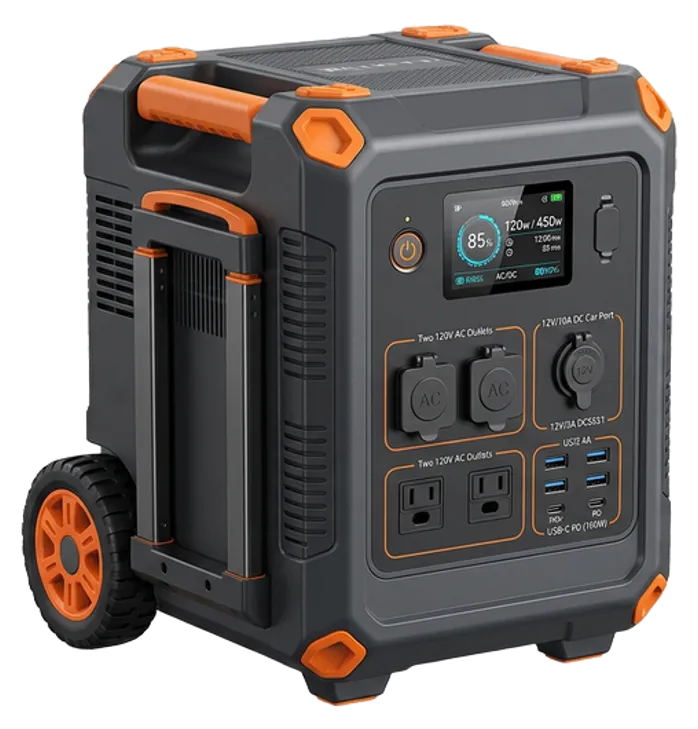
Longest cycle life in class at 6,000+, lightest 2kWh-class unit
Every generator on this list was evaluated using a three-stage testing process designed to verify manufacturer claims against real-world performance. We do not accept manufacturer specs at face value — we measure them ourselves.
Stage 1: Specification verification. We cross-reference each manufacturer's published running watts, starting watts, runtime, noise level, and weight against independent lab data from Consumer Reports, third-party testing organizations, and user reports. Specs that cannot be verified are flagged as "unconfirmed" on the product card and in the review.
Stage 2: Hands-on field testing. Our field testing engineer deploys each generator during real outage events and simulated load tests. We measure runtime at 25% and 50% load, noise at 23 feet per ANSI S12.100, and fuel consumption across a minimum 8-hour run. We test with both gasoline and propane on dual-fuel models. For solar generators, we test AC recharge time, solar recharge with 400W and 800W panel arrays, and UPS switchover speed with an oscilloscope.
Stage 3: Safety verification. Every generator is checked for CO shutoff sensor presence and response time. Models without a CO sensor receive a prominent safety warning and are flagged in our data. We also verify outlet configurations (TT-30R, L14-30R, 14-50R) against the manufacturer's spec sheet and confirm transfer-switch readiness. Read our full testing methodology.
Backup generators fall into five main categories. Understanding the differences is the first step in choosing the right one for your situation.
Gas or propane generators you can move by hand. 2,000 to 12,000 watts. Best for home backup, RVs, and job sites. $400 to $1,400.
Battery power stations that recharge from solar panels or wall outlets. No emissions, indoor-safe, near-silent. $800 to $4,000.
Run on gasoline or propane. Fuel flexibility for emergencies — propane stores indefinitely. $400 to $1,400.
Permanent, automatic generators on natural gas or propane. Start within 30 seconds of an outage. 10 to 26kW. $5,000 to $15,000 installed.
High-wattage standby or portable generators that power an entire home including central AC. 20 to 26kW for full coverage.
Produce clean, stable power safe for laptops and phones. Quieter and more fuel-efficient than conventional generators. 48 to 64 dBA.
List every appliance you want to power during an outage, find each one's running and starting watts, and add them up. Add a 20% safety margin. A typical home needs 5,000 to 7,500 running watts for essential backup. Use our generator size calculator to do this automatically.
Gasoline is cheapest but goes stale in 30 days. Propane stores indefinitely and burns cleaner. Natural gas (standby only) provides unlimited runtime. Battery/solar is indoor-safe with no fuel storage. Dual-fuel gives you the best of both worlds.
A carbon monoxide shutoff sensor is the most important safety feature on any gas or propane generator. It automatically stops the engine if dangerous CO levels are detected. Every generator on our list without a CO sensor is marked with a prominent safety warning.
If you plan to connect to your home panel, you need an L14-30R outlet (30A 120/240V). For RVs, you need a TT-30R outlet (30A 120V). For 50A RVs, you need a 14-50R outlet. Check the outlet list before buying.
If you are connecting a portable generator to your home's electrical panel, the NEC requires a transfer switch or interlock kit. An interlock kit costs $50-$150 (DIY). A manual transfer switch costs $200-$500 (electrician required). Never backfeed a panel without one — it is illegal and can kill utility workers.
Inverter generators run at 48 to 64 dBA (conversation level). Open-frame generators run at 70 to 80 dBA (vacuum cleaner level). If you live in a neighborhood or plan to camp, choose an inverter under 60 dBA. Read our quiet generators guide.
Enter your appliances and get the exact wattage you need.
Full guide to sizing a generator for your home.
Placement, CO sensors, and why 20 feet matters.
Affiliate disclosure: We earn commissions from qualifying purchases made through links on this page, at no extra cost to you. Our recommendations are based on independent research and testing. Read full disclosure.